difference between couscous and quinoa
 Quinoa vs Couscous: Which is Best? | Live Eat Learn
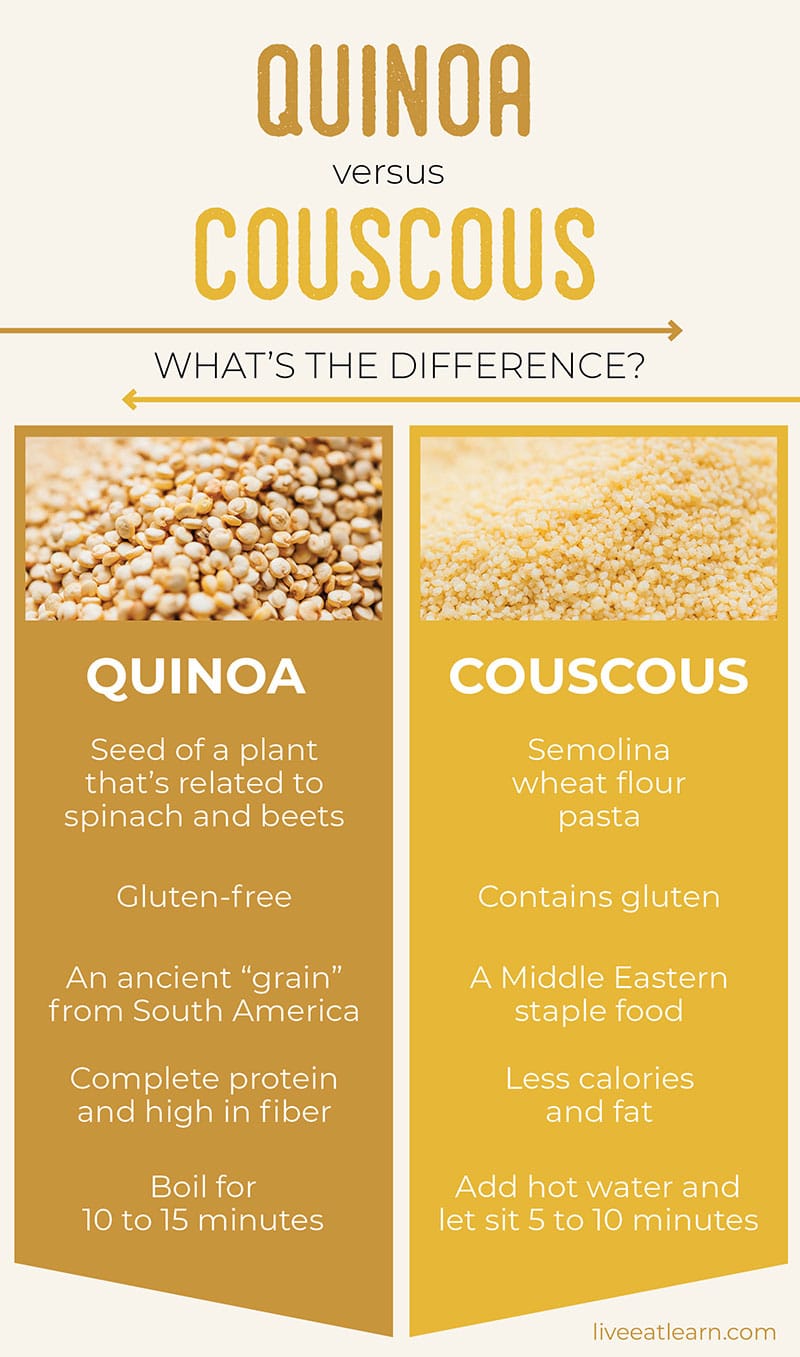
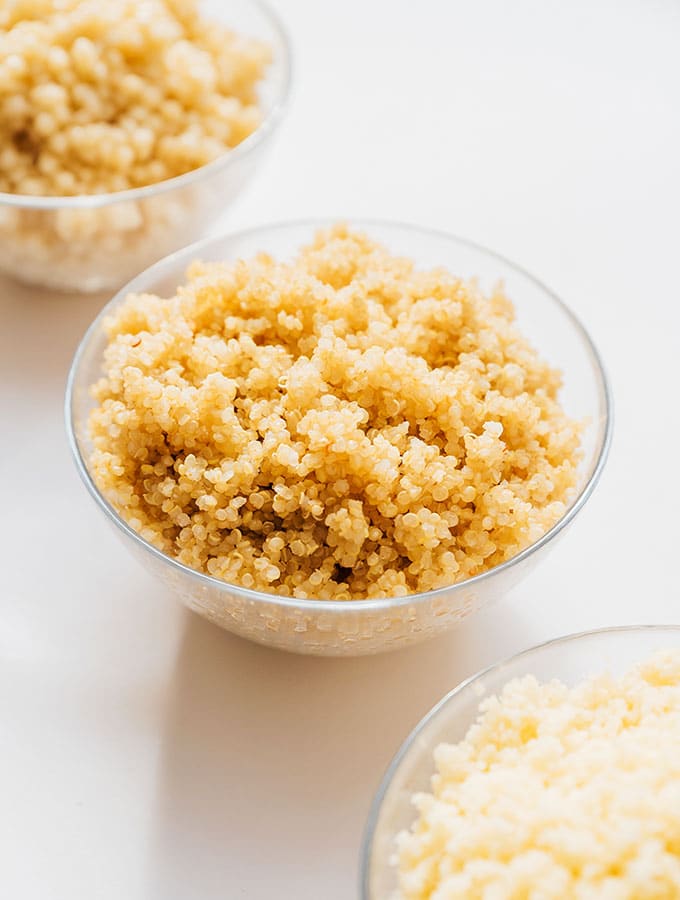
Nutrition What is the difference between Couscous and Quinoa? Quinoa and couscous are two small foods, similar to the grains often consumed as alternatives to rice and pasta. Given their similar appearance and culinary applications, many tend to confuse them or simply wonder how they differ. In nutritional terms, they are very different from each other. This article explains the main differences between quinoa and couscous to help you decide what to choose. Although couscous and quinoa may look the same, they are different foods. is a type of small pasta made of steamed semolina — a flour made of wheat durum. It therefore belongs to the Gramineae, or herb, family and is a basic food in North Africa (name Morocco), Algeria and Tunisia (). On the other hand, quinoa is the seed of the quinoa plant, which belongs to the Chenopodiaceae, or góosefoot, family (). However, it is classified as pseudo-cereal due to its nutritional composition. It is also typically consumed as a grain instead of a seed (). There are three different varieties of quinoa, red, black and white, all cultivated in the Andean region of South America. AbstractCouscous is a type of pasta made of semolina, while quinoa is a seed that is usually eaten as a grain. Couscous is a type of pasta made of semolina, while quinoa is a seed that is usually eaten as a grain. While couscous and quinoa nutritional profiles are somewhat similar, their main differences have to do with nutrient quality rather than quantity. The following graph compares the nutritional profiles of a 3.5 ounces (100 grams) of couscous cooked and (, ):CouscousQuinoaCalories112120Carbs23,2 grams21,3 gramsFiber1,4 grams2,8 gramsProtein3,8 grams4Fát0,16 grams1,92 gramsSelenium50% of the protein value naturally. However, quinoa has about 12 times the amount of fat that couscous, which comes predominantly from healthy fatty acids for the heart such as omega-3 and omega-6 (). In addition, despite similar content of carbohydrates and proteins, their nutrient quality differs significantly. First, quinoa is known for having a unique protein profile. The protein includes amino acids, which are divided into essential and harmful. Your body can only produce nonessentials, which means essential amino acids should be obtained from food (). Unlike couscous—and most grains and legumes, two common plant-based protein sources—the quinoa contains all essential amino acids. This makes it a high quality protein source (, , , ). As for its carbohydrate content, the quinoa packs twice as much fiber as the couscous, which means it will make you feel more full for longer. Quinoa also has a low (GI) of 53, compared to the average couscous GI of 65. A high GI means that a food is likely to increase your blood sugar levels, while a low GI means that a food will produce a slower and more stable increase in blood sugar (, ).SummaryQuinoa and couscous have compositions of similar nutrients but different nutritional qualities. Unlike couscous, quinoa contains all essential amino acids and is less likely than its blood sugar. Quinoa and couscous have compositions of similar nutrients but different nutritional qualities. Unlike couscous, quinoa contains all essential amino acids and is less likely than its blood sugar. Couscous and quinoa each have their share of health benefits. For example, couscous provides high amounts of selenium. This trace metal supports your immune system and thyroid function and may decrease the risk of heart disease and certain cancers (, ). It also acts as a powerful antioxidant that combats the harmful effects of free radicals, which are linked to premature aging and cancer (. The quinoa also packs large amounts of antioxidants, including phenolic acids, flavonoids and terpenoids, which confer antidiabetic, anticancer and anti-inflammatory properties (). In addition, eating low IG foods such as quinoa (or following a low GI diet) has been associated with a lower risk of heart disease and diabetes (, , ).However, both foods also have some drawbacks. For example, being made of wheat, couscous is a protein that is predominantly found in wheat, barley and rye. Therefore, it may not be suitable for people with celiac disease or gluten sensitivity (). Contrary to this, quinoa is naturally gluten free. That said, it contains prolamins, a group of proteins present in gluten. According to a tube study, these proteins can trigger symptoms in some people (, , ).However, human research suggests that daily intakes of up to 1.8 ounces (50 grams) of quinoa can be well tolerated by people with celiac disease, making it a safe alternative for those who follow a gluten-free diet (). AbstractCouscous is rich in selenium, a mineral necessary for various metabolic processes, but also contains gluten. Quinoa is gluten free and rich in antioxidants, but also contains prolamins, which can trigger symptoms in sensitive people with celiac disease. Couscous is rich in selenium, a mineral needed for various metabolic processes, but it also contains gluten. Quinoa is gluten free and rich in antioxidants, but also contains prolamins, which can trigger symptoms in sensitive people with celiac disease. Couscous and quinoa differ in flavor and texture. Couscous has a texture of pasta and neutral flavor, which means it knows a lot like the ingredients it cooks with. In contrast, the quinoa has a slightly nutty flavor and crunchy texture. As for their preparation, both products completely absorb water or stock like rice, without the need to drain them. You can prepare both with chicken or vegetable broth to improve your taste. As for their culinary uses, couscous and quinoa can be used invariably in many recipes, as they are enjoyed both hot and cold and served as side dishes or mixed in salads. In addition, quinoa can be made in flour and used in baked products due to the functional properties of your starch, which include gelation, viscosity and foam (). Cooking with quinoa flour can improve the nutritional quality of baked products, since it adds extra proteins, fiber and gluten-free (). You can also trust the quinoa to make soup, oats and sweet or salty snacks. AbstractCouscous has a texture similar to pasta and neutral flavor, while quinoa has a crispy texture and nut flavor. They can be used interchangeably on some dishes, but quinoa can also be made in flour for use in baked products. Couscous has a texture similar to pasta and neutral flavor, while quinoa has a crispy texture and nut taste. They can be used interchangeably on some dishes, but quinoa can also be made in flour for use in baked products. Both couscous and quinoa are tasty, versatile and easy to cook. They also offer multiple health benefits, including support for the immune system, better control of heart health and glucose in the blood, and protection against certain types of cancer. However, if you are trying to improve the nutritional profile of a meal, increase protein intake, or follow one, quinoa would be your best choice. On the other hand, if you are simply looking to change your regular pasta or rice service, couscous could provide some variety to your daily meals. Just remember that couscous does not fit a gluten-free diet. SummaryYou have to consider your dietary needs by choosing one on the other. Quinoa can improve the nutritional profile of your meal and adapt to a gluten-free lifestyle. Meanwhile, couscous can add variety to your regular meals. You have to consider your dietary needs by choosing one on the other. Quinoa can improve the nutritional profile of your meal and adapt to a gluten-free lifestyle. Meanwhile, couscous can add variety to your regular meals. Couscous and quinoa are two versatile grain-like foods with different nutritional qualities. Unlike couscous, quinoa is high in proteins, fibers and antioxidants based on plants, and has a low glucose index. However, both offer multiple potential health benefits and make a huge addition to salads — although quinoa's culinary uses expand into soups, oats and baked products. Remember to consider your dietary needs by choosing one over the other, as quinoa is adapted to a gluten-free diet, while couscous is not. Last medical review on November 17, 2020Read this following
:max_bytes(150000):strip_icc()/quinoa-vs-couscous-3970360_FINAL-5b8940b5c9e77c007b538244.png "How to Tell the Difference Between Quinoa and Couscous")
How to Tell the Difference Between Quinoa and Couscous
/GettyImages-103340097-5c1ff51c46e0fb00017fe42b.jpg "How to Tell the Difference Between Quinoa and Couscous")
How to Tell the Difference Between Quinoa and Couscous

What's the Difference Between Couscous and Quinoa?
Quinoa vs Couscous: Which is Best? | Live Eat Learn
Quinoa vs Couscous: Which is Best? | Live Eat Learn
Difference between: quinoa and couscous - ErinNudi.com

Your Guide to Common (and Not-So-Common) Grains
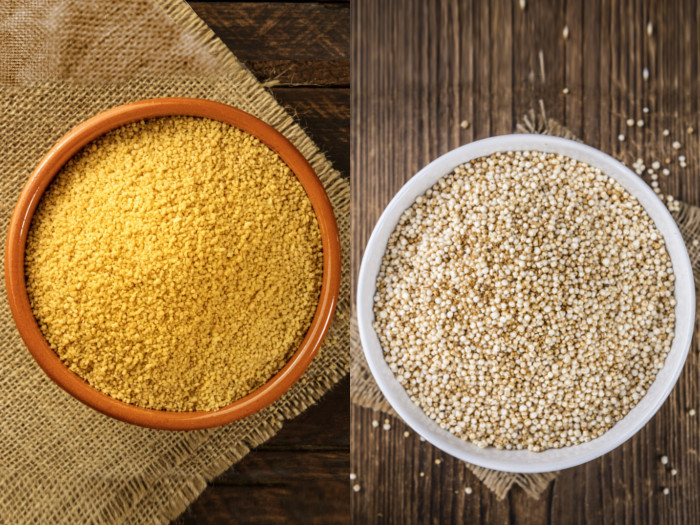
Couscous vs Quinoa | Organic Facts

What to Cook: Couscous Versus Quinoa? - Lifetime Daily
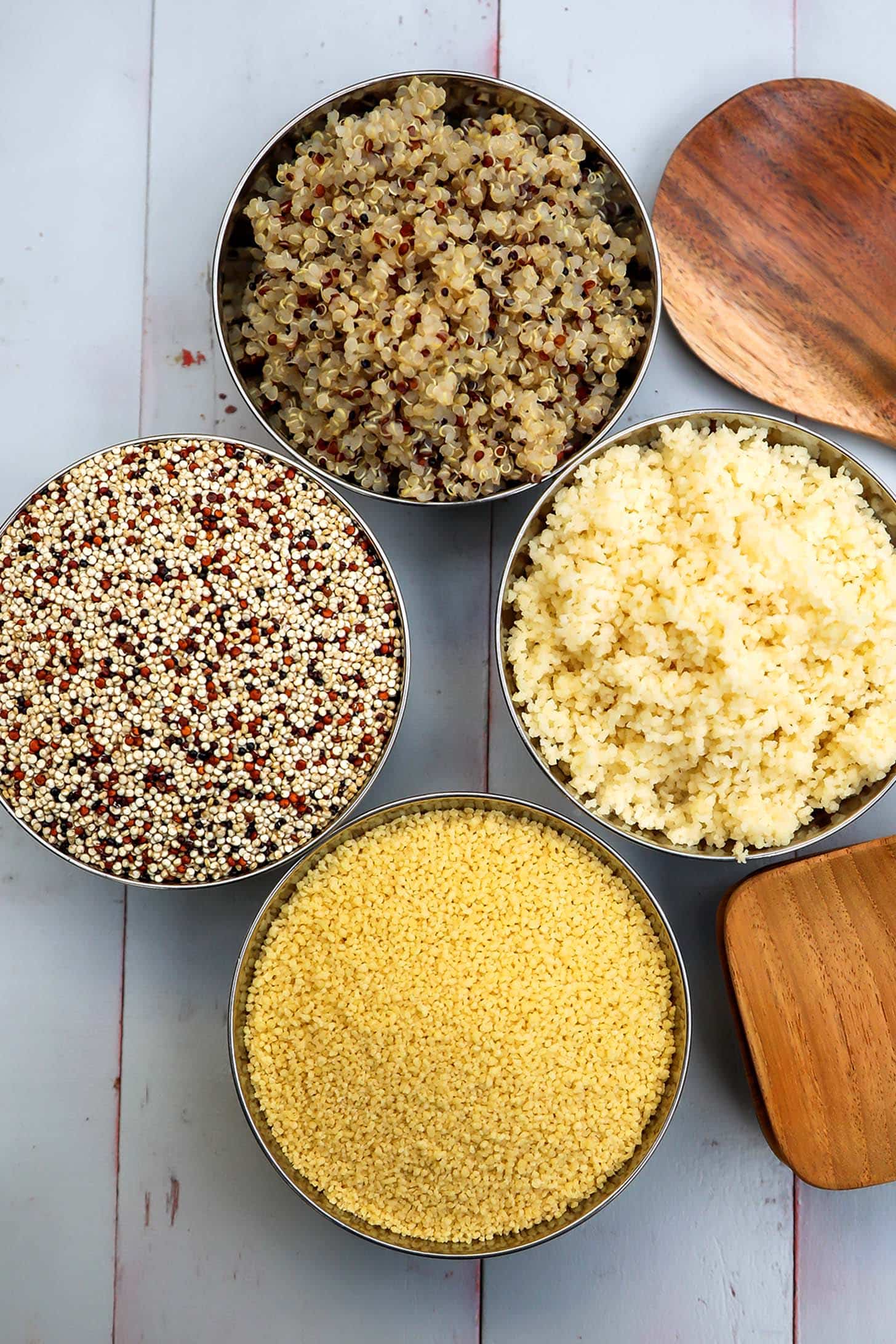
Couscous vs Quinoa: Which One is Better? | Chef Tariq
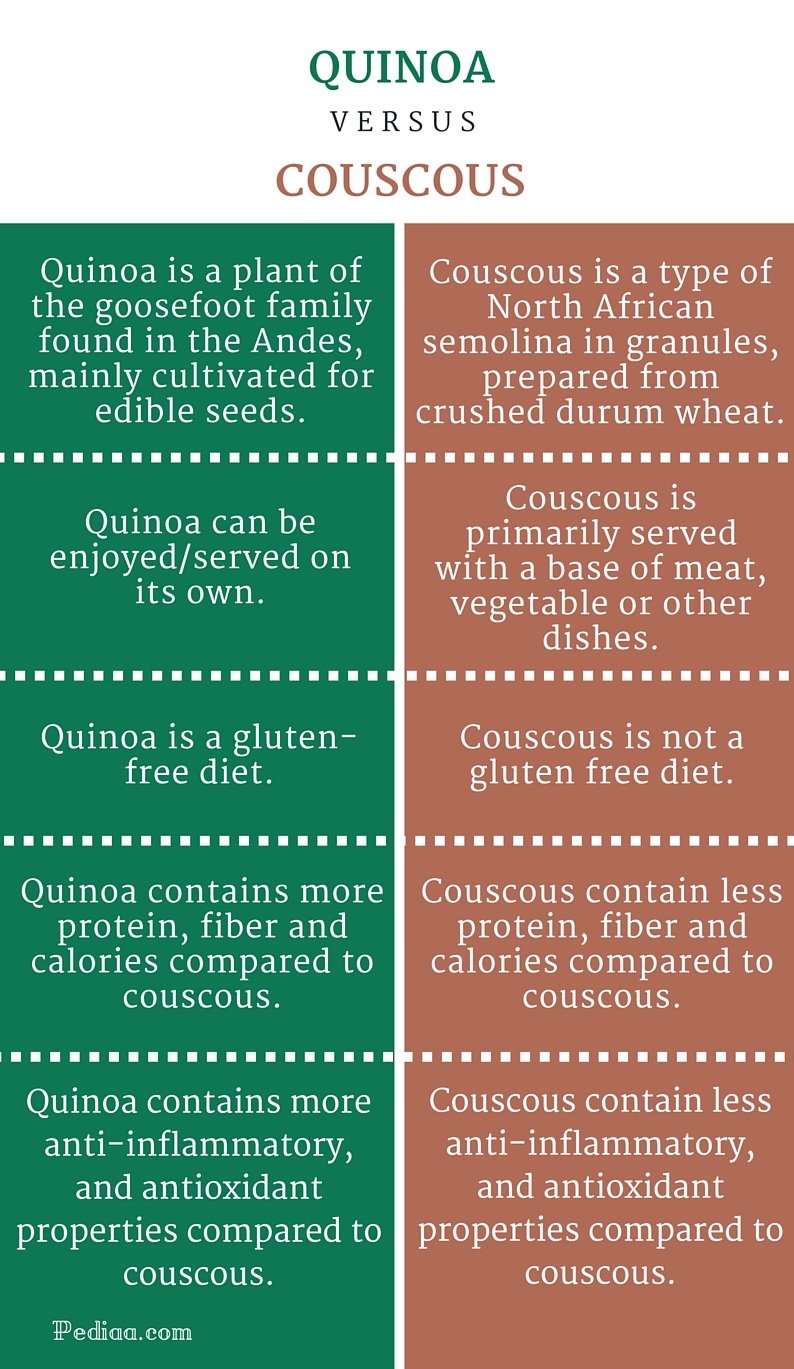
Difference Between Quinoa and Couscous
![Quinoa vs Couscous [How They Differ + Photos to Compare]](https://nitrocdn.com/GBUIJNbPwrUQyrWPRqBmSdwnurEgkiVg/assets/static/source/rev-3609b9f/wp-content/uploads/2017/11/two-different-varieties-of-quinoa.jpg "Quinoa vs Couscous [How They Differ + Photos to Compare]")
Quinoa vs Couscous [How They Differ + Photos to Compare]

Health Factor Face-Off: Quinoa vs. Brown Rice vs. Couscous | Quinoa healthy, Couscous healthy, Healthy rice
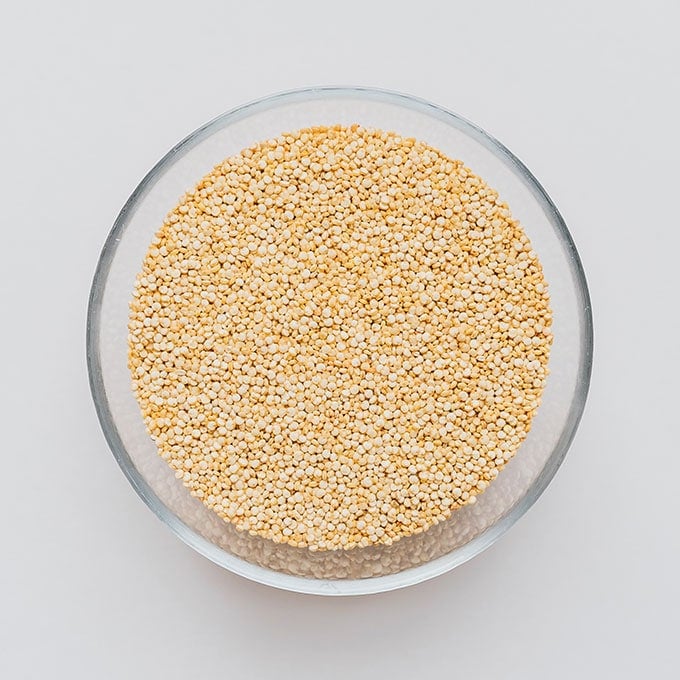
Quinoa vs Couscous: Which is Best? | Live Eat Learn
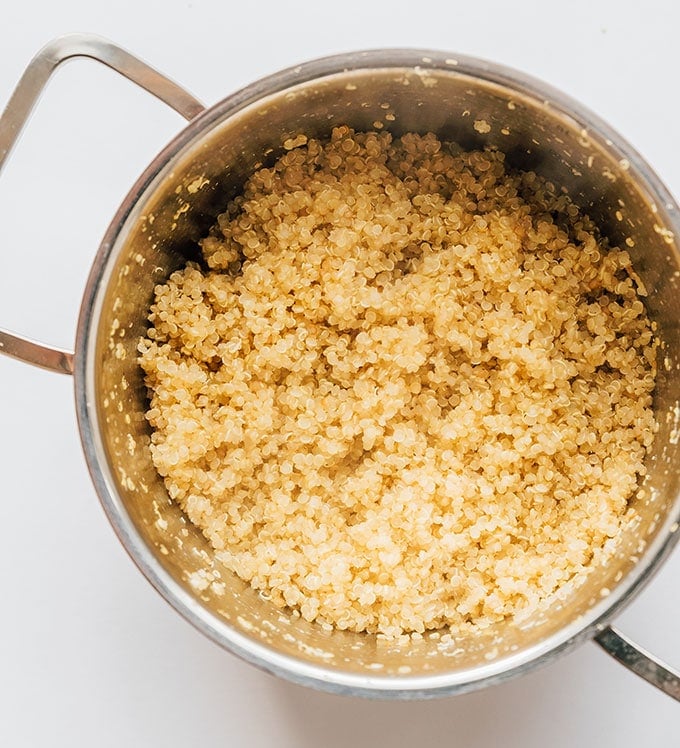
Quinoa vs Couscous: Which is Best? | Live Eat Learn
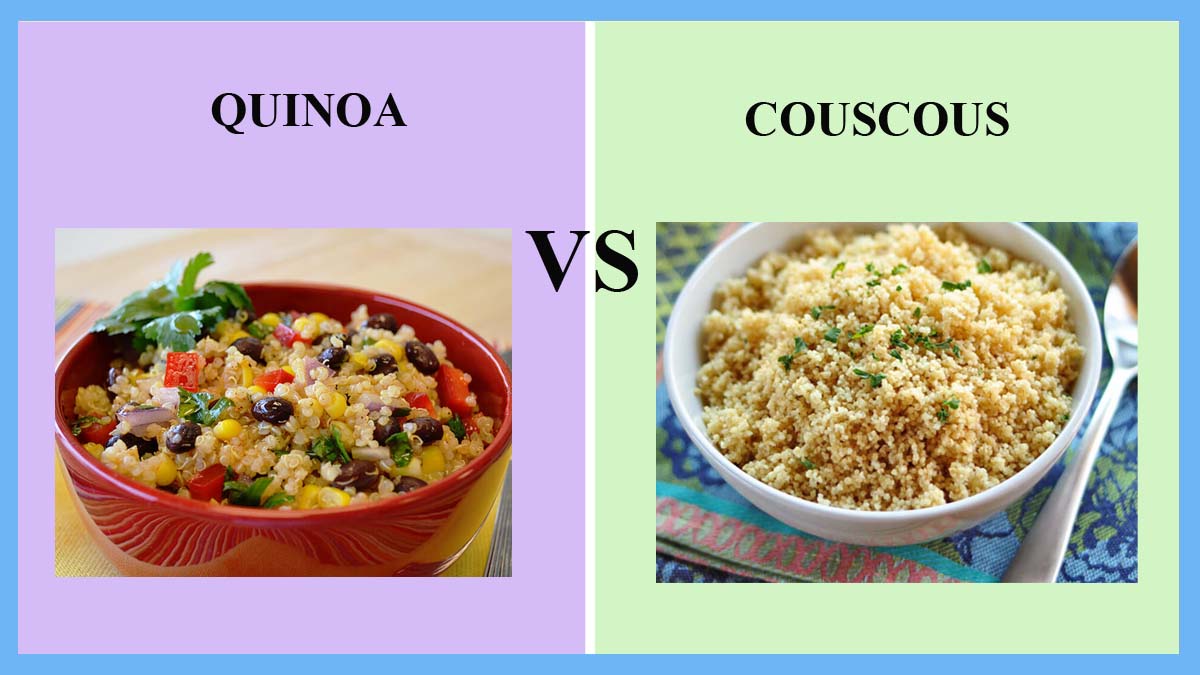
Quinoa vs Couscous | thosefoods.com
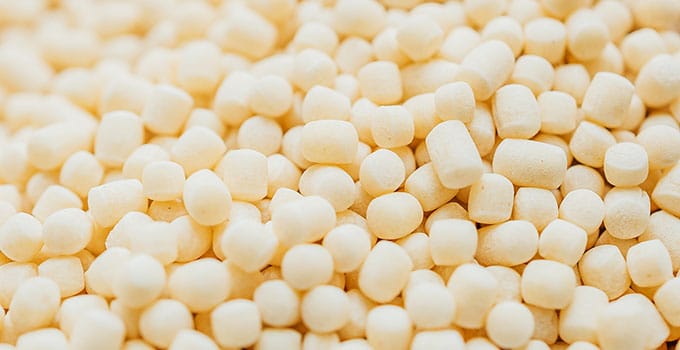
Quinoa vs Couscous: Which is Best? | Live Eat Learn
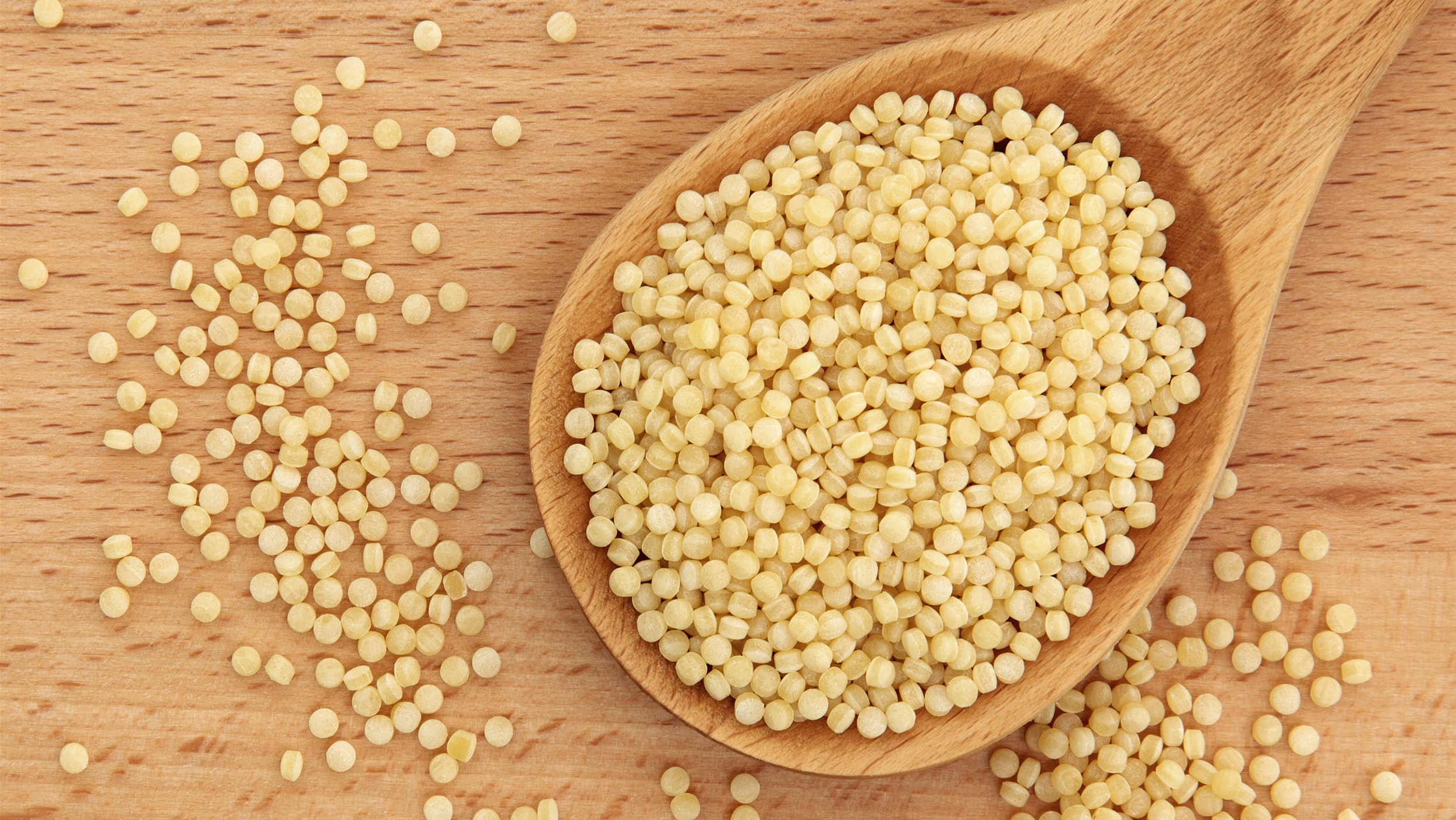
No-cook recipes for summer: Make these easy, healthy quinoa, couscous and bulgur grain recipes
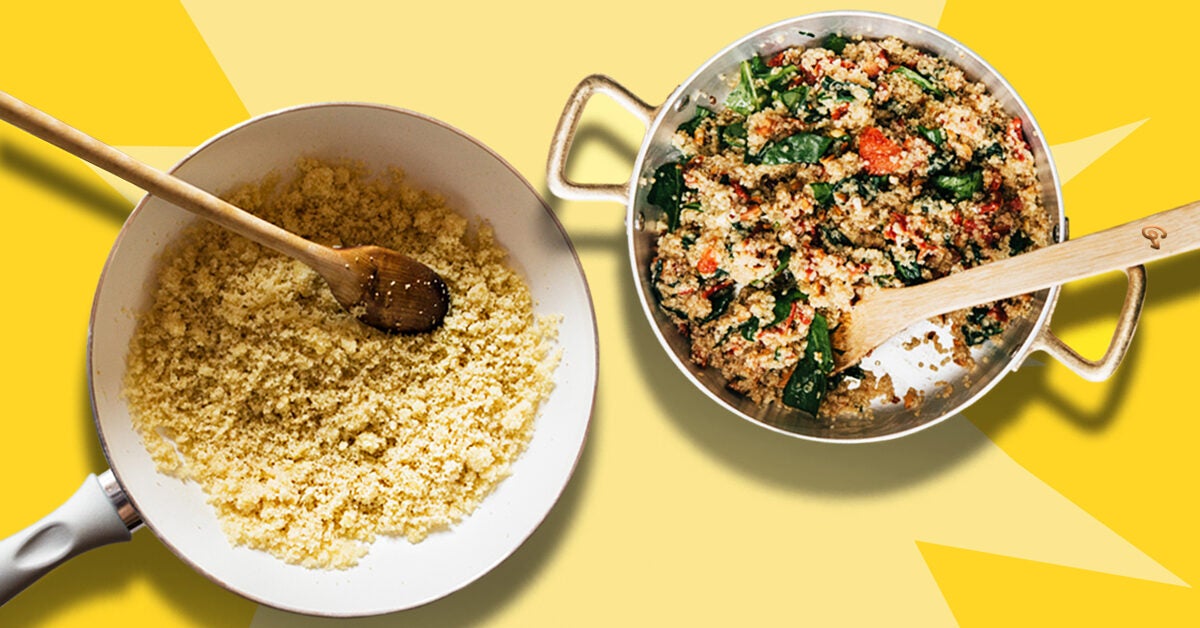
Couscous vs. Quinoa: Nutrition, Benefits, and Recipes
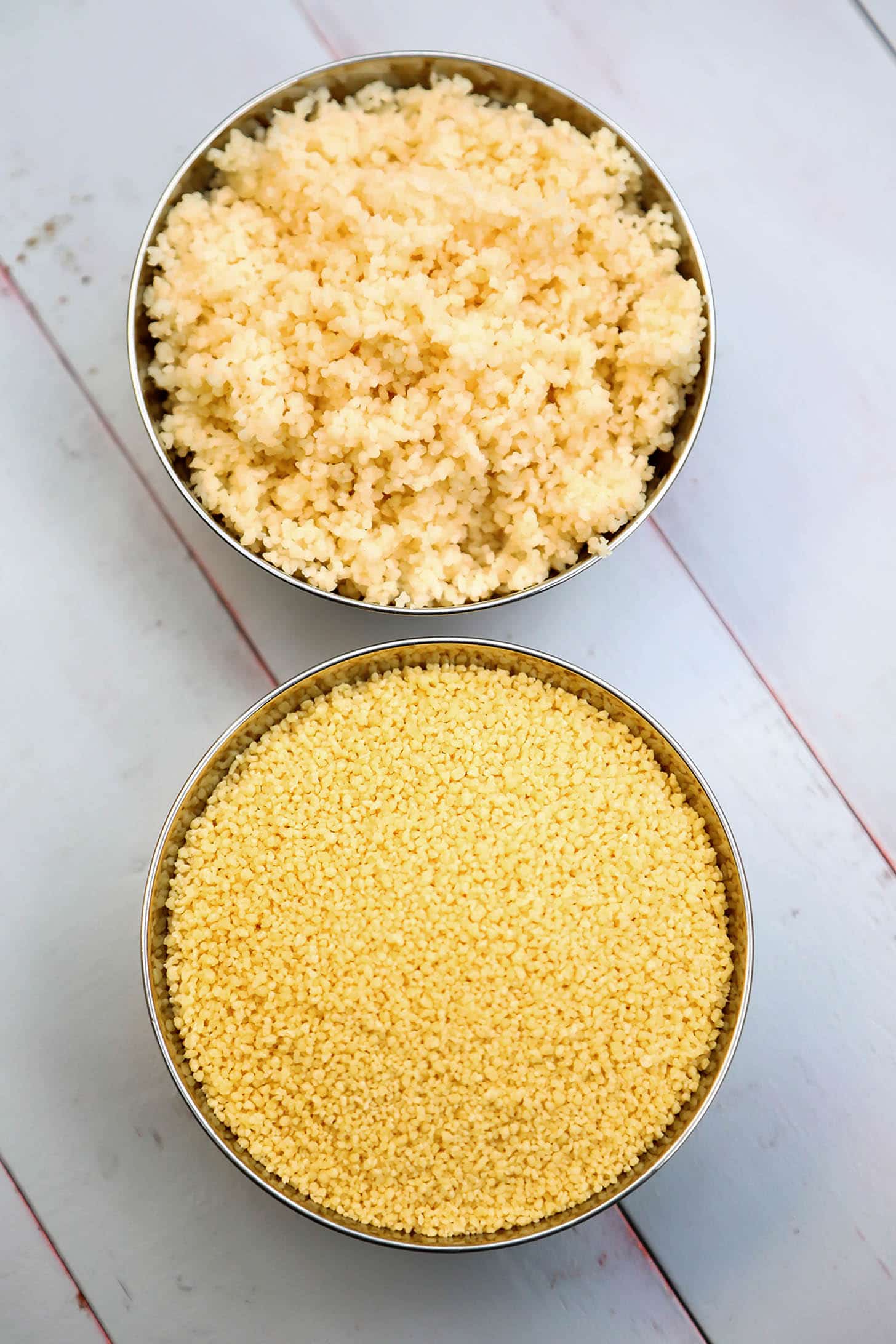
Couscous vs Quinoa: Which One is Better? | Chef Tariq
/couscous_annotated3-d2dc76949dbd4eb182c0b1f46901861f.jpg "Couscous Nutrition Facts: Calories, Carbs, and Health Benefits")
Couscous Nutrition Facts: Calories, Carbs, and Health Benefits

The Real Difference Between Couscous And Quinoa

Couscous-Quinoa Tabouli | The Nutrition Source | Harvard T.H. Chan School of Public Health
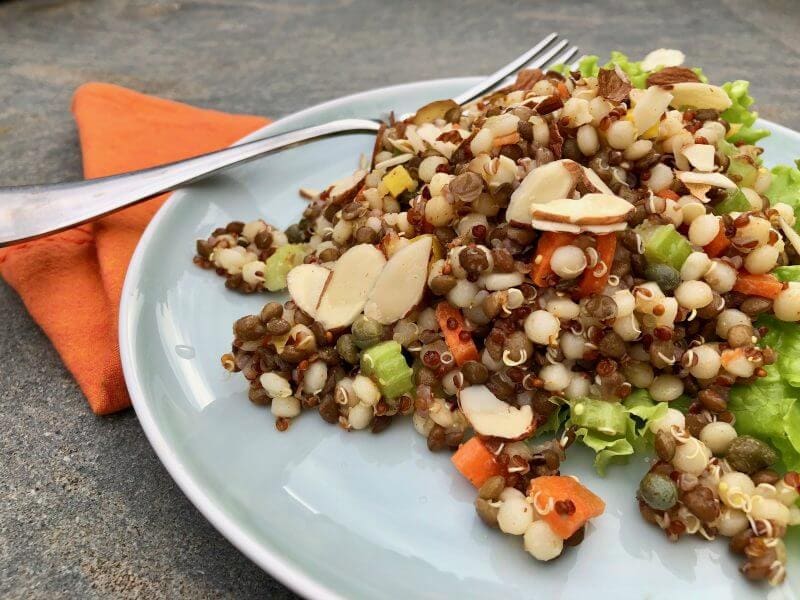
Lentil, Quinoa, and Couscous Salad | Catskill Animal Sanctuary

Is the difference between couscous and quinoa and how they benefit your health | The State – The State

The Real Difference Between Couscous And Quinoa
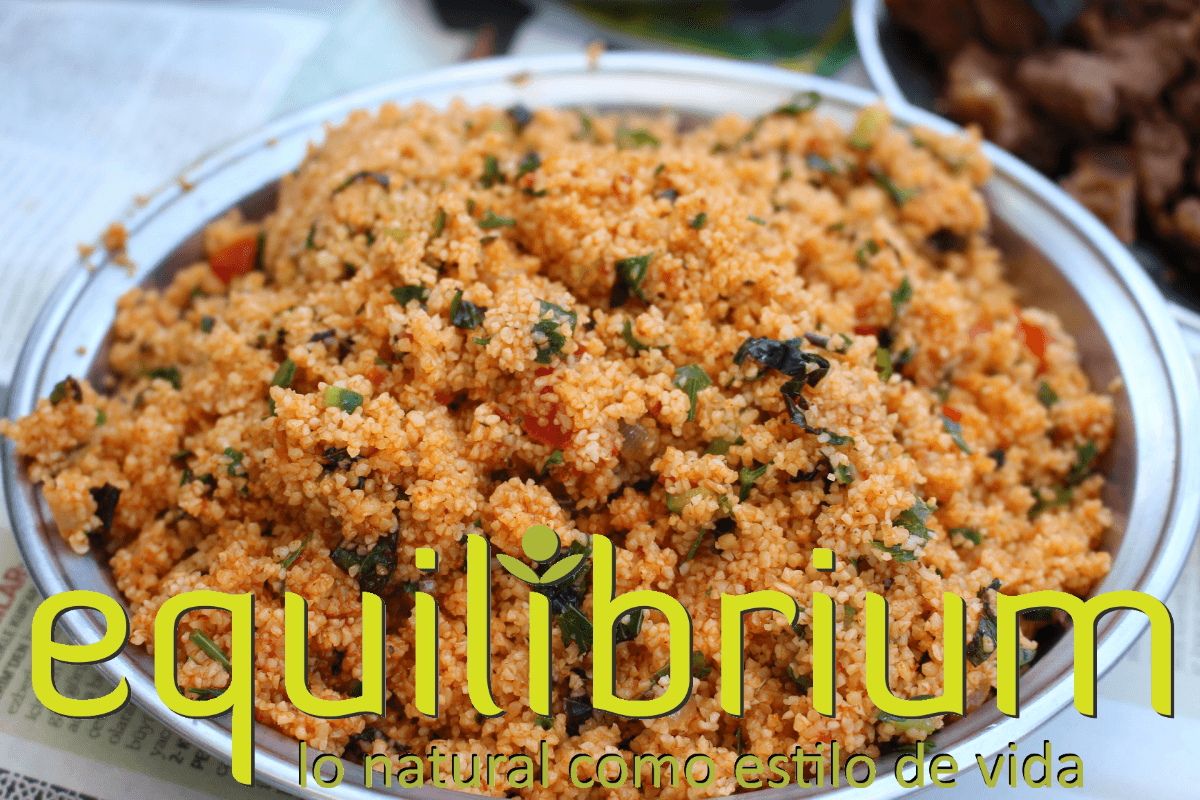
DO YOU KNOW THE DIFFERENCE BETWEEN QUINOA, BULGUR, AND COUSCOUS? | by Equilibrium lo natural como estilo de vida | Medium

What Is the Difference Between Quinoa, Farro, and Wheat Berries? - Chowhound
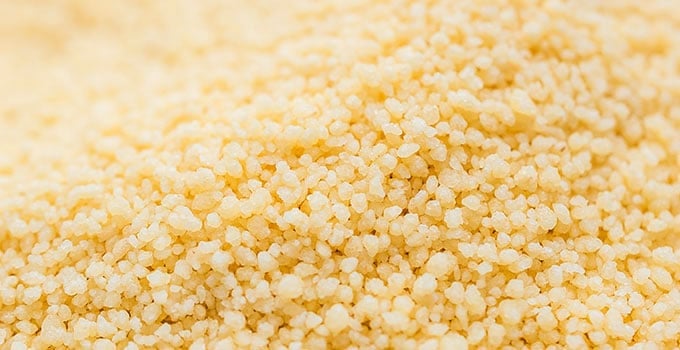
Quinoa vs Couscous: Which is Best? | Live Eat Learn
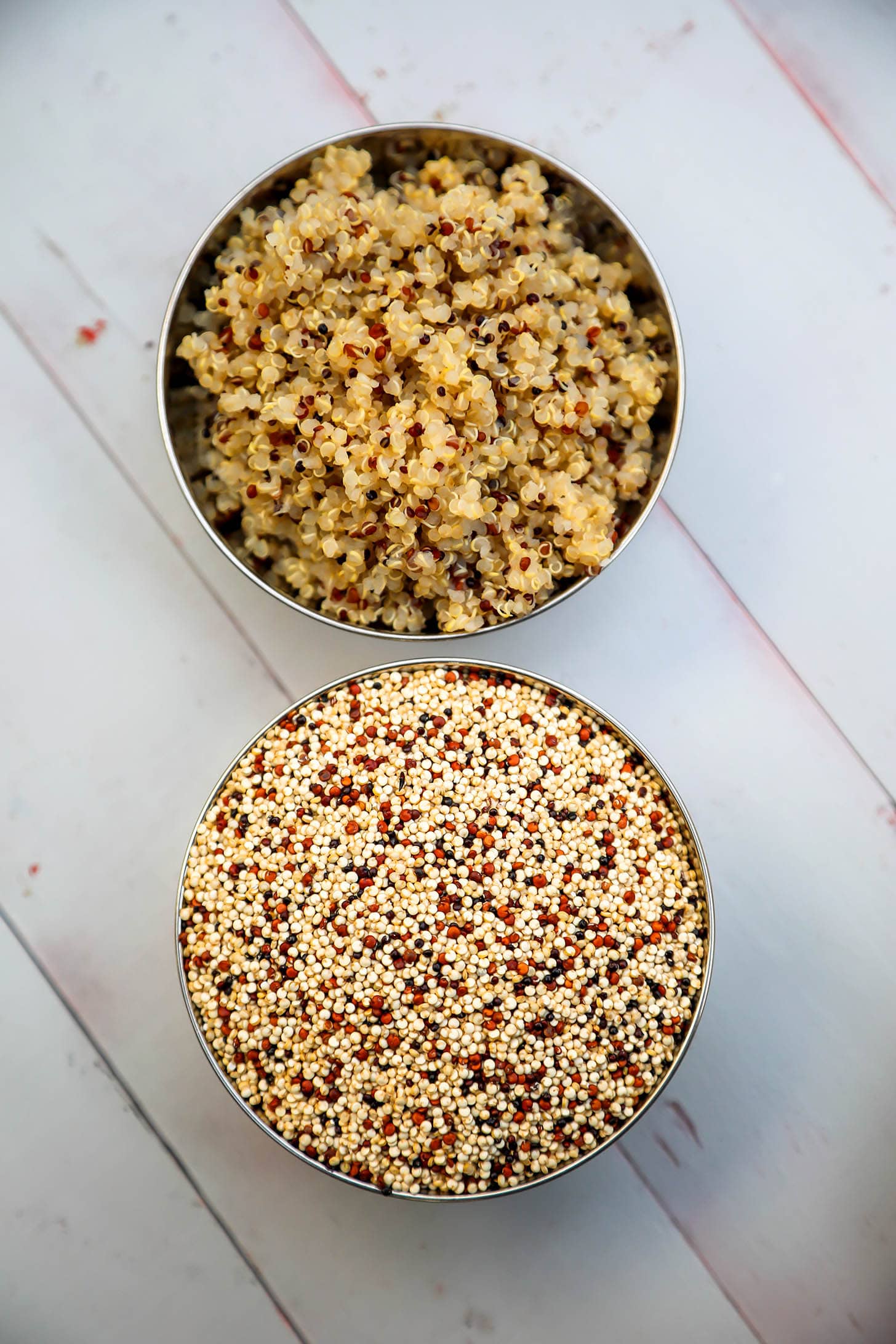
Couscous vs Quinoa: Which One is Better? | Chef Tariq

Health Factor Face-Off: Quinoa vs. Brown Rice vs. Couscous

What is the Difference Between Bulgur and Couscous?

Quinoa Vs Couscous: What You Should Know | What is quinoa, Delicious clean eating, Healthy side dishes
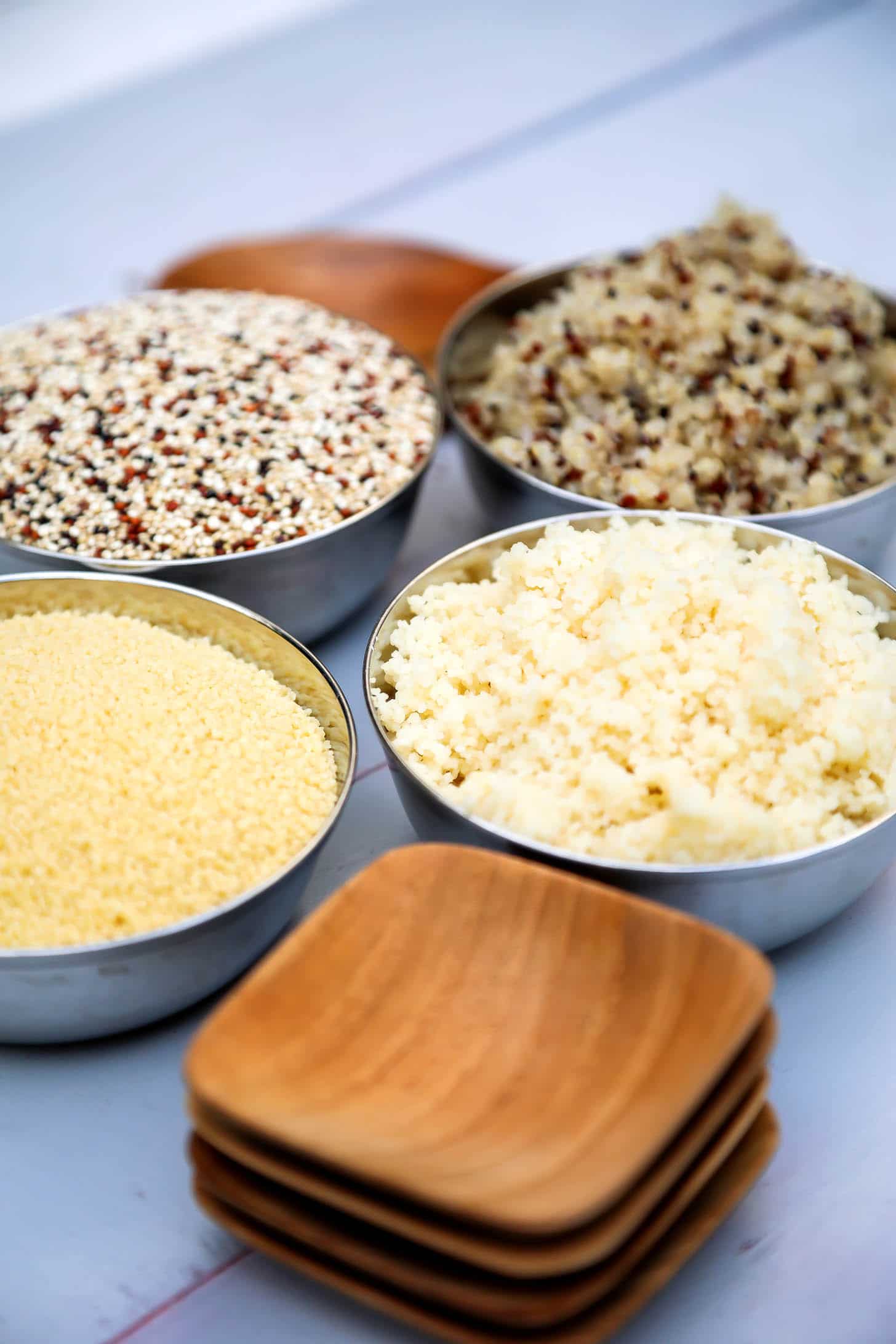
Couscous vs Quinoa: Which One is Better? | Chef Tariq

Couscous vs. Quinoa: A Comparison - Fit Biscuits
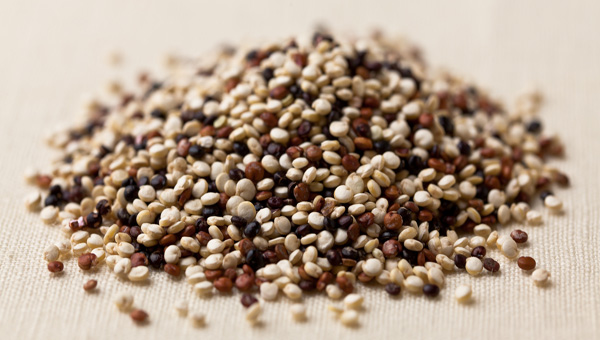
5 Healthier Carb Choices That Few People Know About

Couscous vs Quinoa: Which Should You be Feeding Your Family? | Eat, Healthy recipes, Healthy eating

Couscous vs Quinoa: Which Should You Be Feeding Your Family Tonight?
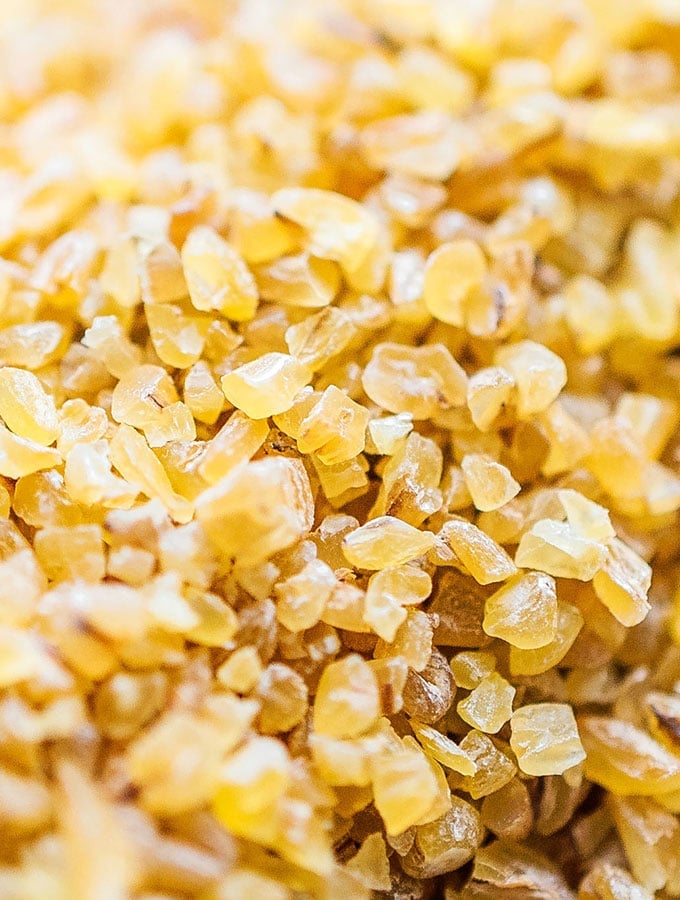
Bulgur vs Couscous: Which is Best? | Live Eat Learn
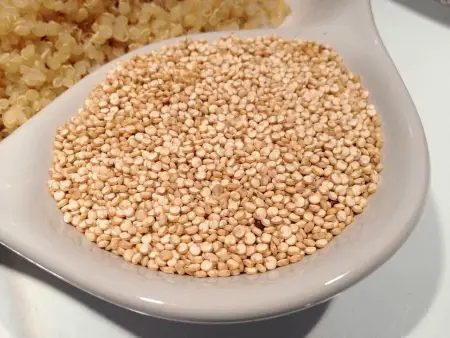
Couscous vs Quinoa - Difference

Posting Komentar untuk "difference between couscous and quinoa"